ADDRESS CANVASSING FOR THE 2020 CENSUS
Census workers are working in a neighborhood near you! Beginning in early August and running through mid-October 2019, census workers will be verifying addresses from the Master Address File (MAF) to ensure that no residences are missed in next year’s enumeration.
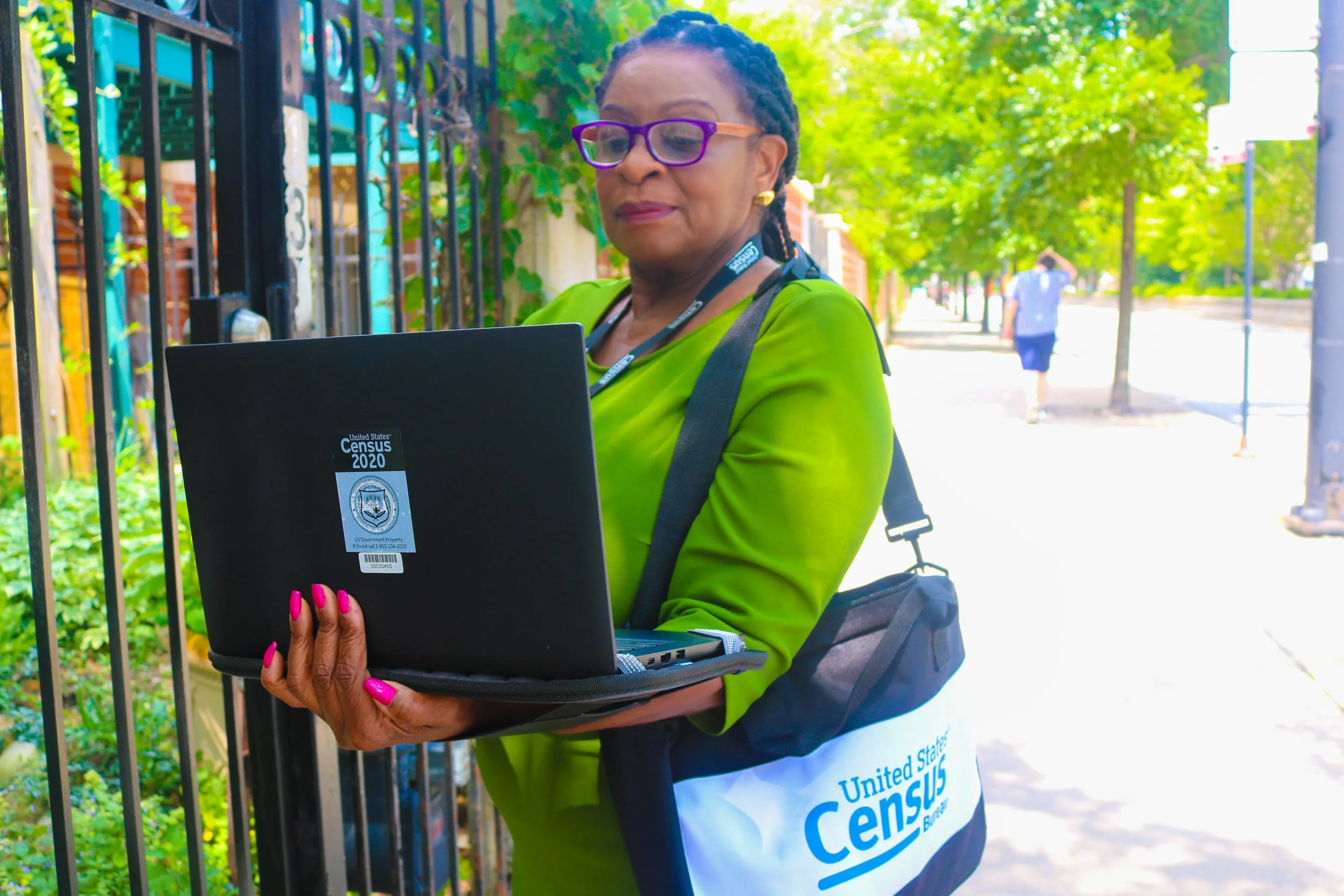
All address canvassers will carry an official badge with photo ID, a US Census Bureau bag, and a Census Bureau issued laptop.


GROUP QUARTERS (GQ) ENUMERATION
The U.S. Census Bureau will aim to count all Americans in the right place, once and only once, by classifying individuals as: 1) living in housing units (house, apartment/townhome, mobile home, rented rooms) and, 2) people not living in housing units (i.e. living in group quarters). The Bureau considers the following group quarters facilities:
Group homes
Nursing facilities/skilled nursing facilities (nursing homes)
Residential treatment facilities
College/university or seminary student housing
Religious group living quarters
Correctional facilities
In-patient hospice facilities
Hospitals
Workers’ group living quarters
Job Corps centers or vocational training facilities
The Bureau uses multiple approaches to try to get an accurate enumeration of people living in group quarters including:
Electronic Response Data Transfer (eResponse)
In-person Interview
Drop Off/Pick Up of Questionnaire
Paper Response Data Collection
To read more about GQ enumeration, check out the following resources:
2020 Census Detailed Operational Plan for Group Quarters (GQ) Operation
Group Quarters Enumeration (2018 Census Test)
College Dorm Enumeration Fact Sheet (Census 2010)
Ethnographic Study of the Group Quarters Population in the 2010 Census: Prisons for Adults and Juvenile Correctional Facilities (Michelle Inderbitzin and Anna Chan)

¡CENSO 2020!
El Fondo Educativo de NALEO (Asociación Nacional de Funcionarios Latinos Elegidos y Designados) publicó una hoja informativa en el 2018 para abordar las preguntas más frecuentes sobre el Censo 2020. A continuación se presentan algunas conclusiones clave:
¿Por qué es importante participar en el censo?
El censo 2020 determinará cómo se distribuirán más de $700 mil millones en fondos federales a los estados y localidades cada año durante la próxima década.
¿Se mantendrán mis respuestas confidenciales?
Sí. Los datos obtenidos en los formularios del censo son protegidos bajo la ley y se utilizarán solamente para datos estadísticos. El Título 13 del Código de EE. UU. requiere que la información de los participantes del censo se mantenga confidencial y garantiza que la información personal no será usada en contra de los participantes. Haga clic aquí para más información.
¿Cómo y cuándo puedo completar mi formulario del Censo 2020?
En marzo de 2020, todos los hogares recibirán una carta de la Oficina del Censo con instrucciones de cómo llenar el formulario en línea. Cada hogar completará un formulario de 10 preguntas.
Haga clic abajo para la pagina web en español de la Oficina’s del Censo.
CONVERSATIONS ON RACE/ETHNICITY AND IDENTITY
The stories of ordinary Americans are captured in census data. These data are essential for telling us how fast we are growing, how we live, calling out our successes and challenges, and painting the mosaic of what we look like. We all have a story to tell. For many Americans, our identity is expressed, in part, through race/ethnicity. Although categorizations in the decennial census do not fully reflect America’s racial/ethnic diversity, census data provide an opportunity, for some, to share their race/ethnic story.
What is your census story? How does your story compare to the experiences of other Americans? Check out the “NY Times: A Conversation on Race” short film series documenting the intersection between race/ethnicity and identity in America here.

RACE/ETHNICITY AND THE 2020 CENSUS
Participating in the decennial census presents an important opportunity for us to stand up, be counted, and tell our stories. For many Americans, the story of where we come from and who we are is inextricably linked to race/ethnicity.
The U.S. Census Bureau asks individuals about race/ethnicity according to guidelines established by the Office of Management and Budget (OMB). Last updated in 1997, the race/ethnicity questions from Census 2010 and Census 2020 are shown below. There are two big picture takeaways:
The OMB definitions of race and ethnicity in Census 2020 will remain consistent with Census 2010. This includes Hispanic, Latino, or Spanish origin, which will remain an ethnicity, not a race.
While race/ethnicity definitions will remain consistent, Census 2020 will feature an important change.
Individuals who identify as White, Black/African American, and/or American Indian or Alaska Native will be asked to specifically identify their racial origins.
As outlined in the planned Census 2020 question, Black/African American individuals, for example, will be asked to print their specific origin (e.g. African American, Jamaican, Haitian, Nigerian, Ethiopian, Somali, etc.). Write in options will still be available for “Other Asian” and “Some other race” categories.
The story of race/ethnicity and Census 2020 also includes technical, behind-the-scene specifics. Following several years of testing, in 2017 the Bureau recommended that OMB adopt the following definitional changes for race/ethnicity:
Reassigning Hispanic, Latino, or Spanish origin to a racial category. This move would have ultimately collapsed the race/ethnicity questions into one question (i.e. race).
Include a new race category for individuals identifying as Middle East and North African (MENA).
The OMB did not respond by December 31, 2017 to these recommendations, effectively forcing the Bureau to retain the race/ethnicity definitions used in Census 2010.
Read more about the U.S. Census Bureau’s research on race/ethnicity here.
Details on how the U.S. Census Bureau will report race/ethnicity in the Public Law (PL) 94-171 file is available here in Appendix D.
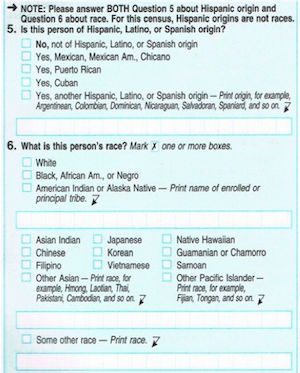
2010: Race/Ethnicity questions
Source: U.S. Census Bureau

2020: Planned Race/Ethnicity questions
Source: U.S. Census Bureau

Same-sex Households and the 2020 Census
Fact. The U.S. Census Bureau does not ask individuals about their sexual orientation or gender identity.
A significant change from the 2010 Census however, is that for the first time in American history, married same-sex couples will be asked to identify themselves on the decennial census. Following the historic Obergefell v. Hodges case in 2015, which legalized same-sex marriage throughout the United States, the U.S. Census Bureau modified the American Community Survey (ACS) form (below) to count same-sex married households.
Source: U.S. Census Bureau, Questions Planned for the 2020 Census and American Community Survey, March 2018
Prior to this landmark decision, in 2000 the Bush administration ordered the Bureau to officially reclassify individuals identifying as married same-sex couples as “unmarried partners”, citing the Defense of Marriage Act (DOMA). In 2010, the Obama administration reversed the earlier decision and allowed the Bureau to report self-identifying same-sex couples as married.
Accurately reporting the number of same-sex unmarried partners and spouses has been difficult. Upon evaluating responses to separate questions about respondent’s sex and their relationship to the head of household (e.g. spouse or unmarried partner), the Bureau discovered an error. Some opposite-sex couples were inadvertently checking the same sex as their spouse, meaning they were counted them a same-sex couple. To address this issue, the Bureau has modified the household relationship to count opposite and same-sex relationships separately. More information about this issue is available in this report from the Pew Research Center.
There is a unavoidable truth in American democracy, which is that you don’t count unless you’re counted. Recognizing this situation, many LGBTQ civil rights groups have advocated that the U.S. Census Bureau ask respondents about sexual orientation and gender identity. As the first decennial census to ask respondents about same-sex marriages, Census 2020 represents progress towards increasing visibility and addressing inequity for some in the LGBTQ community. As a self-identifying gay man who is married, I too celebrate this important step forward. However, it’s important to remember that these data will enumerate some, but not all gay and lesbian spouses, and by no means will be representative of the larger LGBTQ community.
Read more about same-sex marriages on the upcoming census here.
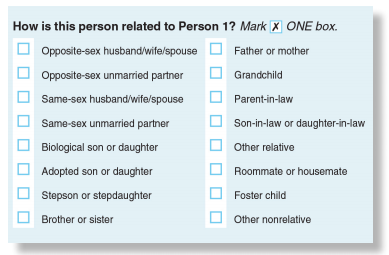
Source: U.S. Census Bureau, Questions Planned for the 2020 Census and American Community Survey, March 2018

LANGUAGES SPOKEN AT HOME AND CENSUS 2020
A 2015 report showed that there are at least 350 different languages spoken in homes across the U.S. As Census Bureau officials gear up for Census 2020, a key area of outreach involves educating and assisting respondents with limited English proficiency to complete the census questionnaire. The good news is that language support for the 2020 Census will be a significant expansion of the efforts from Census 2010. The internet instrument and census questionnaire will be available in 12 non-English languages, while language guides, language glossaries, and the language identification card will be available in 59 non-English languages. More information about language support in the 2020 census is available here.
To provide some local context, consider the following language statistics for the Portland, OR metropolitan area in 2013-2017:
Roughly 82% of Portland metro residents (1,835,000 of 2,240,000) only speak English at home;
Almost one-half million (405,000) Portland metro residents speak a language other than English. The top 5 spoken languages, other than English, in the Portland metro area include:
1. Spanish (46%)
2. Russian, Polish, or Other (10%)
3. Other Asian or Pacific (9%)
4. Other Indo-European (8%)
5. Vietnamese (6%)
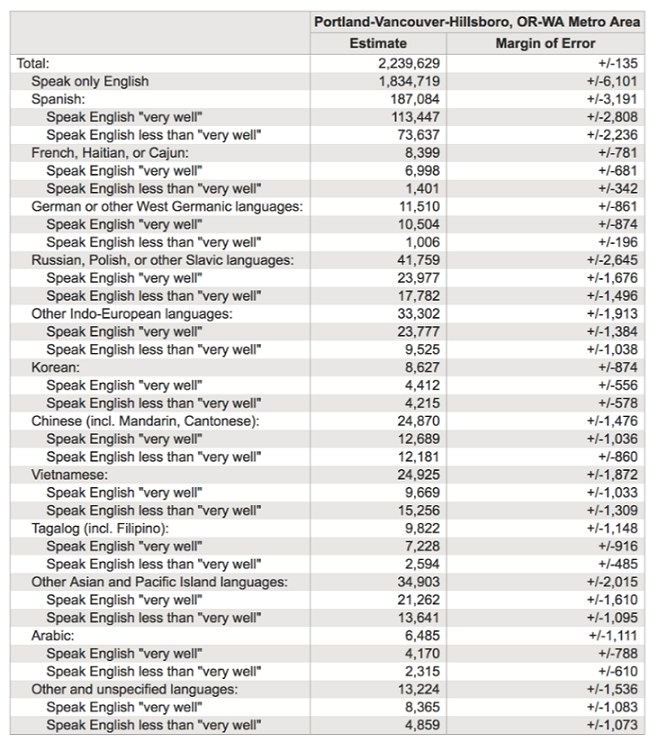
Source: U.S. Census Bureau, American Community Survey (ACS), 2013-2017 (Table C16001).

A NEW PLATFORM FOR ACCESSING CENSUS DATA
In June 2018, the U.S. Census Bureau will introduce a new platform for accessing census data that will ultimately replace the current data engine, American FactFinder. Data users are encouraged to explore the new platform (data.census.gov) to evaluate the look, feel, and functionality of the site and provide the Bureau feedback for improving navigability. Some of the advantages of the new data platform over American FactFinder include: 1) geographic profiles with interactive charts and graphs, 2) enhanced mapping and data visualization techniques, and 3) improved approaches for data sharing across technology mediums.
Important Dates
June 2018
Official release of data.census.gov
September 2018
Release of 2017 (1-year) ACS data on American FactFinder (primary) and data.census.gov (secondary)
December 2018
Release of 2014-2017 (5-year) ACS data on data.census.gov (primary)
Summer 2019
Retirement of American FactFinder
For more information:
2017, June. Census Bureau's New Data Site Offering a 'Google-Style' Approach for Users. Federal News Radio. Authored by Meredith Summers.
2017, May. The Future of Census.gov. U.S. Census Bureau.

HARD-TO-COUNT POPULATIONS
One of the major challenges of any U.S. census is ensuring that everyone gets counted. Sometimes individuals are excluded or "undercounted" from the census. These individuals, sometimes referred to as hard-to-count populations, include children, rural residents, individuals of color, immigrants, homeless, and others.
Image courtesy of Pixabay
Why are hard-to-count populations undercounted?
According to Dr. William O'Hare, there are multiple reasons why individuals are undercounted. These include: home address not included in census address roster, a fear of government and privacy, language issues, complex household relationships, and highly mobile populations with multiple addresses (e.g. renters) (presentation).
What was the Census 2020 and 2010 overcounts/undercounts?
The census undercount varies by race/ethnicity, age, housing tenure, immigrant status, and for urban and rural communities. To provide some context, U.S. Census Bureau reported the following undercounts in Census 2020 and 2010:
Children (ages 0 to 4), -2.8% in 2020 and -4.6% in 2010
Almost 3 per 100 children, ages 0 to 4 (2020)
Black/African American, -3.3% in 2020 and -2.1% in 2010
More than 3 per 100 Black/African-American individuals (2020)
Black/African American men (ages 30-49), -10.1% in 2010
More than 10 per 100 Black/African-American men (ages 30-49) in 2010
Non-Hispanic White individuals were overcounted by 1.6%, a statistically significant increase from the 0.8% overcount in 2010.
Renters, -1.5% in 2020 and -1.1% in 2010
More than 1 per 100 renters (2020)
More detail on the Census 2020 undercount (including by U.S. state) from the U.S. Census Bureau is available here and this is another great resource
What areas of my city/town are more like to be undercounted?
For more information, see this blogpost
What resources are available for addressing undercount in Census 2020?
The Leadership Conference has great information about hard-to-count populations:
Hard to Count: Young Children and Their Communities (PDF)
Hard-to-Count State, City, and Congressional District Tables for Children under Age 5 here
Will You Count? Latinos in the 2020 Census (PDF)
View Hard-to-Count State, City, and Congressional District Tables for Latinos here
Will You Count? Asian Americans and Native Hawaiians and Pacific Islanders (NHPIs) in the 2020 Census (PDF)
View Hard-to-Count State, City, and Congressional District Tables for Asian Americans and NHPIs here
Will You Count? African Americans in the 2020 Census (PDF)
View Hard-to-Count State, City, and Congressional District Tables for African Americans here
Will You Count? American Indians and Alaska Natives in the 2020 Census (PDF)
View Hard-to-Count State, City, and Congressional District Tables for American Indians and Alaska Natives here
Resources on immigrants
Resources on rural undercount
Census Project blogpost
Resources on child undercount
Dr. William O'Hare (presentation)

CHANGING THE APPROACH FOR COUNTING DEPLOYED MILITARY TROOPS
A commonly asked question is "how does the U.S. Census Bureau count college students and other individuals (e.g. "snowbird" retirees) who spend part of the year living in one area and another part of the year living somewhere else?"
The U.S. Census Bureau counts people as residents of a given location based on their "usual residence." Under this approach, usual residence is determined by assessing where individuals spend a majority of their time during a given year. For example, university students are counted as residents of the city where the university is located. Despite criticism by various civil rights groups, incarcerated individuals are counted as residents where the prison facility is located. These approaches remain consistent between the 2010 and 2020 censuses.
Census 2020 and Deployed Military Troops
In early 2018, the U.S. Census Bureau released a memohighlighting a change in how the Bureau will count some active-duty members of the military in Census 2020. In Census 2010, military troops deployed overseas (not stationed) were counted according to their address provided at enlistment. In Census 2020, these troops will be counted as residents of the military base or port from which they are deployed.
The Takeaway
Military installations are geographically distributed across the U.S., but the number of active-duty and reserve service members varies by state. Areas with military bases or ports that deploy a large number of troops will likely see an increase in their resident population, all things being equal.
For more information:
2017, February. Final 2020 Census Residence Criteria and Residence Situations. Federal Register.
2017, February. 2020 Census to Count Deployed Troops at Home Bases, Prisoners at Facilities. NPR. Authored by Hansi Lo Wang.

STARTING A BUSINESS? OWN YOUR OWN BUSINESS? CHECK OUT THE CENSUS BUSINESS BUILDER!
Developing a successful business plan demands comprehensive sociodemographic and economic data. To make business planning easier, the U.S. Census Bureau offers two data tools: 1) one for aspiring entrepreneurs and current business owners, called "Small Business Edition" and, 2) one for regional planners, economists, and business tradespeople, called "Regional Analyst Edition." The best part? They're free.
Dig into the census data now and begin your analysis by clicking on the following link:


HISTORY OF RACE/ETHNICITY AND THE CENSUS
The stories of ordinary Americans are captured in census data, and are essential for painting the mosaic of what we look like. One of the most important forms of individual identity, race/ethnicity, is collected by the U.S. Census Bureau under definitions outlined by the Office of Managment and Budget (OMB). Three important points regarding race/ethnicity and the census:
1. A product of history, public policy, and mobility and migration patterns, there are distinct geographic patterns of race/ethnicity across the U.S. For an interesting side-by-side comparison of changes in race/ethnicity from 2000 to 2010 for the largest U.S. metropolitan areas, check out this link.
2. The 2000 census was the first census where individuals could select more than one race. For a comprehensive account of the individual actors and institutions engaged in this change, check out Portland State University Professor Dr. Kim Williams' book, Mark One or More: Civil Rights in Multiracial America.
3. To see how race/ethnicity categories have changed in the census over time, from 1790 to 2010, visit:


ACCESSING CENSUS DATA
One of the biggest challenges for students, policymakers, and the general public is knowing where and how to access census data. The U.S. Census Bureau's primary data engine, American FactFinder, provides users access to all census data products. For novice users looking for an overview of the FactFinder site, this tutorial is quite helpful. Access to FactFinder is available here:
Census Reporter is another useful website for quickly accessing census data. Like FactFinder, users can access data for their state, county, and town. Access Census Reporter here: